
🧠 OpenAI, the Global RAM Crisis, and Financial Reality in 2026
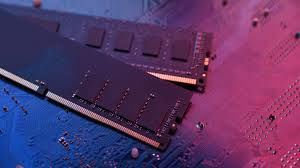
Few topics in the tech world today combine industry disruption, supply chain shock, and financial speculation as powerfully as the ongoing RAM (memory) crisis — and the role of OpenAI in it. From skyrocketing prices to strategic supply deals and questions about OpenAI’s financial health, this article breaks it all down clearly and realistically.
💾 What’s the RAM Crisis All About?
Since 2024, the semiconductor memory market has entered a structural shortage phase. Unlike pandemic-era supply chain shutdowns, this crisis is driven primarily by explosive demand from AI infrastructure, which requires enormous amounts of high-performance memory.
The effects have included:
Sharp increases in DRAM and DDR5 prices
Reduced supply for consumer PCs and smartphones
Manufacturers prioritizing AI-optimized memory (like high-bandwidth memory)
Strained inventories across global markets
In short: AI demand has reshaped the memory market.
🤖 Why AI — and OpenAI — Are Central to the Shortage
Training and running large AI models requires massive compute clusters filled with GPUs and extremely high memory capacity. AI data centers consume significantly more memory per server than traditional cloud systems.
OpenAI, along with other AI leaders, has reportedly secured long-term supply agreements for advanced memory components to guarantee future capacity. These deals help stabilize AI growth — but they also reduce available supply in the broader market.
It’s important to note:
OpenAI is not the only company contributing to demand.
Hyperscalers like Microsoft, Google, Amazon, Meta, and Nvidia are also scaling aggressively.
The memory shortage is an industry-wide AI demand issue, not a single-company event.
Still, OpenAI’s rapid infrastructure expansion has placed it at the center of the conversation.
💸 Is OpenAI in Financial Trouble Because of the RAM Crisis?
This is where speculation often runs ahead of facts.
What’s True:
AI infrastructure is extremely expensive.
Long-term hardware contracts require billions in capital commitments.
OpenAI has faced large projected operating costs as it scales globally.
What’s Not Confirmed:
There is no verified public evidence that OpenAI is bankrupt or collapsing.
The company continues to secure major investments and partnerships.
Restructured deals suggest financial strategy adjustments — not financial failure.
Building AI at scale is capital-intensive. That doesn’t equal crisis — it reflects the reality of competing in one of the most infrastructure-heavy industries in modern tech.
📈 The Impact on Consumers and Businesses
The RAM crisis has affected more than just AI labs.
Consumers and companies have experienced:
Higher laptop and desktop prices
More expensive server hardware
Increased cloud infrastructure costs
Delays in some product launches
When memory becomes scarce, everything built on top of it becomes more expensive.
⏳ When Will the RAM Crisis End?
This is the question everyone is asking.
🏗 1. New Fabrication Plants Take Time
Memory manufacturers like Samsung, SK Hynix, and Micron are expanding production capacity — but building and ramping up new fabrication plants (fabs) can take 2–4 years. Capacity increases are not instant.
📊 2. AI Demand Is Still Growing
AI adoption is accelerating across industries — finance, healthcare, government, defense, and consumer applications. As long as demand for AI models keeps climbing, pressure on memory supply will remain high.
💰 3. Market Cycles Matter
The semiconductor industry historically moves in cycles:
Oversupply → prices crash
Undersupply → prices spike
We are currently in a high-demand, tight-supply phase. Analysts expect some stabilization as new capacity comes online — potentially beginning in late 2026 or 2027, depending on AI growth rates.
🔮 Realistic Outlook
The most probable scenario:
Gradual price stabilization within 12–24 months
Continued premium pricing for high-end AI memory
Consumer RAM easing first before specialized AI memory
In other words: relief is likely, but not immediate.
🧠 The Bigger Picture
The RAM crisis represents something bigger than just rising prices — it marks a structural shift in computing.
We are entering an era where:
Memory is a strategic resource
AI infrastructure competes with consumer tech for supply
Hardware access influences global technological power
OpenAI is one visible driver in this transformation — but it is part of a broader AI arms race reshaping the semiconductor world.
🏁 Final Thoughts
The global RAM crisis is real, and AI demand — including OpenAI’s growth — has played a significant role in accelerating it. However, there is no confirmed evidence that OpenAI is in a financial collapse because of it.
What we are witnessing is the cost of scaling a transformative technology at unprecedented speed.
The real question isn’t just “When will RAM prices fall?”
It’s whether the world can build hardware infrastructure fast enough to sustain the AI revolution without creating long-term imbalance in global tech markets.


I really appreciated the way the author organised the information. I appreciated the completeness with which the various aspects are treated. I found it useful to compare this text with other resources I had read. It is content that deserves to be read calmly and carefully.